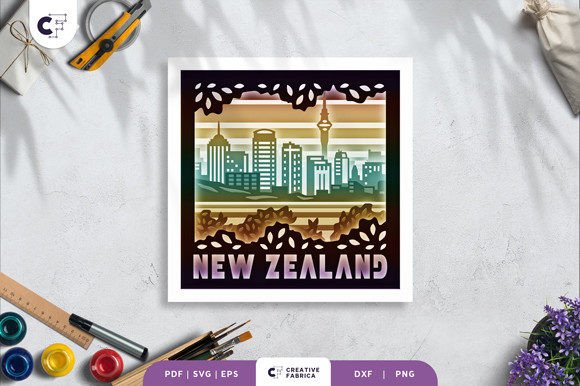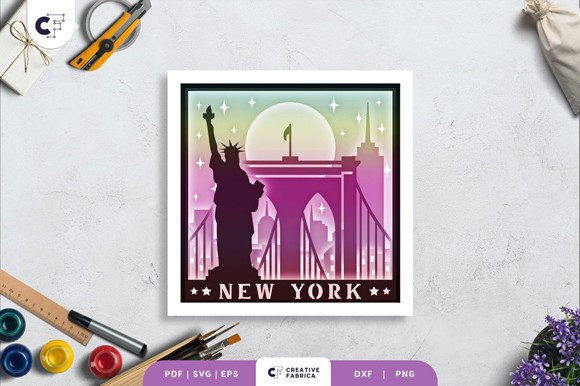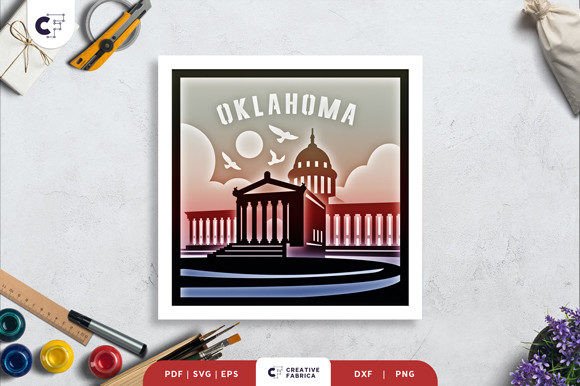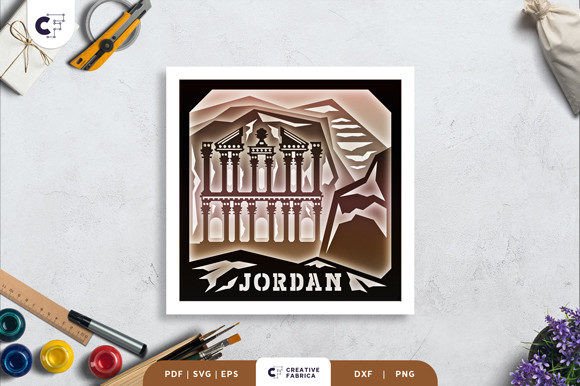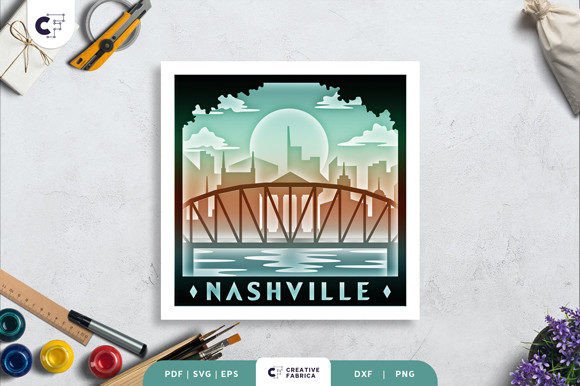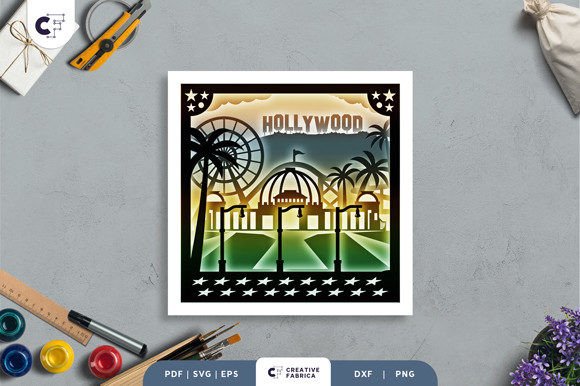
Los Angeles Landmark 3D Shadow Box Review
As a designer who has spent years navigating the intersection of digital art and physical thread, I approach every new asset with a critical eye. When I first opened the file for the Los Angeles Landmark 3D Shadow Box, my initial reaction was one of cautious optimism. This is not your standard flat silhouette or a simple line-art outline. It presents itself as a layered, square paper cutting template designed to create depth, which immediately raises questions about how it translates from a Countries category listing into a tangible machine embroidery design. The visual personality here is bold and architectural, capturing the essence of the USA City Skylines with a distinct focus on dimensionality.
First Impressions: Depth Meets Thread
The mood this design evokes is modern and urban, yet there is an inherent complexity that demands respect. The layout relies heavily on overlapping layers to achieve its 3D effect. In the context of a digital product seller looking for fresh assets, the appeal is obvious; it stands out against the sea of flat cityscapes. However, when I mentally map this onto fabric, the challenge becomes clear. The "shadow box" concept implies multiple planes of existence. For an embroidery project, this means we are likely dealing with significant stitch density and potentially complex underlay requirements to support the raised look without puckering the fabric.
I found myself thinking about the specific details of the Los Angeles skyline within this template. The way the buildings stack creates a sense of grandeur, but in embroidery, grandeur can quickly turn into bulk if not managed correctly. The visual clarity is high on a screen, but on a textured material like denim or canvas, those fine distinctions between layers could blur. As a reviewer, I appreciate the ambition of the design, but I know that success lies in the execution. This is where the transition from a 3D SVG file to a stitched reality requires careful planning.
Real-World Application: From Tote Bags to Boutique Merch
Let's imagine a real-life scenario. You are a small shop owner preparing for a holiday collection, and you want to offer a custom embroidered tote bag featuring iconic American cities. You decide to use the Los Angeles Landmark 3D Shadow Box for a limited run. How does it perform? If placed on a sturdy cotton tote bag, the design has the potential to be a showstopper. The square format works beautifully for the front panel of a bag or the back pocket of a pair of jeans.
However, consider the customer experience. A buyer picking up this handmade product expects a certain level of finish. If the layers of the shadow box are too close together, the fill stitch might bleed through to the adjacent layer, muddying the crisp lines of the skyline. Conversely, if spaced correctly, the interplay of light and shadow created by the thread texture can mimic the actual depth of a paper cutout. This makes it an excellent candidate for custom apparel like sweatshirts, where the fabric weight can handle the density, or even as an embroidered patch sewn onto a denim jacket.
For the Etsy seller focusing on nursery decor, this design offers a unique angle. Imagine a pillow cover for a child's room with a love for big cities. The geometric nature of the Los Angeles Landmark 3D Shadow Box fits well with modern interior trends. Yet, one must be mindful of the tactile feel. A baby item needs to be soft. If the stitching is too dense due to the 3D layering, it might irritate sensitive skin. In such cases, using a lighter stitch density or opting for a satin stitch border instead of full fill might preserve the aesthetic while ensuring comfort.
Navigating Fabric and Hoop Challenges
Not every fabric is forgiving enough for a design of this complexity. When working with the Los Angeles Landmark 3D Shadow Box, I would strongly advise against using thin or highly stretchy fabrics like jersey knit without heavy stabilization. The tension required to pull through the layers of a 3D design can distort the fabric, ruining the square symmetry of the template. Similarly, curved surfaces like caps present a significant hurdle. The rigid geometry of the skyscrapers will fight against the curve of a baseball cap, likely causing registration issues where the layers do not align perfectly.
Dark fabrics also require special attention. To make the shadows pop and maintain the illusion of depth, you will need high-contrast thread colors. A dark grey building on a black sweatshirt will disappear unless you use a very specific metallic or neon thread, which changes the entire vibe of the piece. Furthermore, detailed corners in the skyline architecture can be tricky. On a small hoop size, these tiny points may not stitch cleanly, resulting in jagged edges that detract from the professional look. Always check the minimum recommended hoop size before committing to a project.
Practical Notes for the Professional Designer
Before you list this as a commercial embroidery asset or begin production, there are several practical steps you must take. First, always test the design on scrap fabric that matches your final project material. This allows you to inspect the stitch density and ensure that the layers do not merge unintentionally. Review the file settings carefully; since this originates as a layered paper cutting template, the conversion to an embroidery file must be handled with precision to avoid excessive jump stitches.
Secondly, confirm the licensing terms. While the description mentions receiving the template in a specific format, it does not explicitly detail commercial rights for finished goods. As a creative entrepreneur, you must verify whether you can sell items made with this design or if it is restricted to personal use. Missteps here can lead to legal trouble for your craft business.
Finally, consider the presentation. Use printable mockups to visualize how the design looks on different products before stitching. Compare light and dark fabric backgrounds to see how the Los Angeles Landmark 3D Shadow Box adapts. Does it lose its impact on white linen? Does it shine on navy blue? These decisions affect your brand consistency and customer trust. By treating this design with the care it deserves, you can transform a digital template into a high-value, professional finished product that stands out in any market.