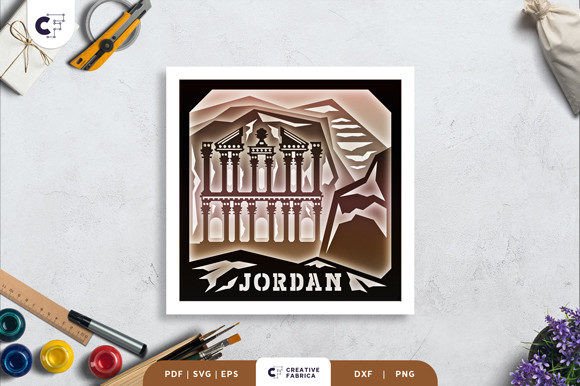
Petra Jordan 3D Shadow Box Paper Cut Review
As a designer who has spent years navigating the intersection of digital art and physical thread, I approach every new asset with a critical eye. When I first encountered the Petra Jordan 3D Shadow Box Paper Cut, my initial reaction was one of intrigue mixed with caution. This is not a standard flat embroidery pattern; it is a layered, square paper cutting template designed to create depth. While the product description explicitly identifies this as a Countries themed 3D SVG for paper crafts, the visual complexity of Petra offers a fascinating challenge for those of us looking to translate such architectural grandeur into textile form or hybrid projects.
The mood this design evokes is immediate: ancient history meets modern precision. The facade of the Treasury at Petra is iconic, defined by its intricate columns, arches, and weathered stone textures. In a digital file format intended for cutting machines, these details are crisp and clean. However, when I mentally map this onto a real-world project—say, a high-end custom tote bag or a boutique pillow cover—I start asking the hard questions about how that "3D" illusion translates when we move from paper to fabric.
Visualizing the Design in Real-World Projects
Let's imagine a scenario where I am preparing a limited-run collection of travel-themed home decor. I want to create a series of embroidered patches that celebrate world landmarks. If I were to adapt the aesthetic of the Petra Jordan 3D Shadow Box Paper Cut into an embroidery file, the first thing I would consider is the layering. The original concept relies on physical layers of paper to create shadow and depth. In machine embroidery, we achieve this through stitch density and thread texture.
For a project like a heavy canvas tote bag design or a structured sweatshirt embroidery piece, the bold outlines of Petra work beautifully. The strong vertical lines of the columns can be rendered using a dense fill stitch to mimic the solidity of stone, while the delicate carvings might require a fine running stitch or a very narrow satin stitch. The visual personality of this landmark is majestic and slightly mysterious, making it perfect for a personalized gift for a history buff or a unique addition to a small shop product line focused on travel.
However, the transition from a paper cut template to a stitched product requires careful planning. The "shadow box" effect implies negative space and overlapping elements. On fabric, if you do not use the right stabilizer, those overlapping areas can look muddy rather than dimensional. I would recommend testing the design on scrap fabric first to ensure the stitch density doesn't overwhelm the fabric texture. A lightweight linen or a sturdy cotton blend would likely handle the weight of the design better than a thin jersey knit, which might pucker under the stress of dense stitching.
Navigating Technical Challenges and Fabric Choices
While the design is visually stunning, there are specific situations where the Petra Jordan 3D Shadow Box Paper Cut concept needs to be handled with care. Small hoop sizes are a potential pitfall. The intricate details of the Petra facade require space to breathe. Attempting to cram this entire composition into a tiny 4x4 inch hoop could result in lost details and a cluttered appearance. For a professional finish, I would suggest ensuring your hoop size accommodates the full width of the design without compromising the integrity of the architectural lines.
Fabric choice is equally critical. Textured fabrics like fleece or bouclé can interfere with the precision needed for the finer details of the temple. Similarly, stretchy fabrics present a challenge; the tension required to hold the design taut during stitching can distort the straight lines of the architecture. Dark fabrics are another consideration. To make the light-colored stone of Petra pop against a black background, you would need a bright white or cream thread, but even then, the subtle shadows created by the "3D" concept might get lost without careful color selection. Always test your thread colors on the actual fabric before committing to a batch production run.
Curved surfaces, such as caps or hats, also demand attention. The perspective of Petra is linear and frontal. Curving that image around a cap panel can warp the proportions of the columns and arches, breaking the illusion of realism. Unless you have advanced digitizing skills to adjust the perspective specifically for a curved surface, it is safer to reserve this design for flat applications like pillow covers, aprons, or flat-front custom apparel.
Strategic Value for Craft Businesses and Etsy Sellers
For the Etsy seller or the owner of a handmade shop, the value of a design like this lies in its ability to tell a story. A customer buying a personalized gift featuring Petra isn't just buying a picture; they are buying a connection to a place, a memory of a trip, or a dream destination. The Petra Jordan 3D Shadow Box Paper Cut provides a strong visual anchor for this narrative. When presented correctly on a finished product, it elevates the perceived value of the item.
From a branding perspective, using such a recognizable landmark can boost buyer engagement. It signals quality and attention to detail. However, as a professional, I must remind you to verify the licensing terms. Even though the product is described as a template, you must confirm whether you are allowed to sell finished items made from it or if the license restricts commercial use. Do not assume that purchasing a digital embroidery file or SVG grants unlimited commercial rights. Check the license agreement thoroughly to protect your craft business from legal issues.
When creating printable mockups for your online store, pay attention to how the lighting interacts with the design. Since the original concept is a 3D shadow box, your mockups should reflect that depth. Show the design on a textured surface to hint at the tactile quality of the final embroidery. This helps manage customer expectations regarding the finished product.
Final Designer Notes and Recommendations
In conclusion, the Petra Jordan 3D Shadow Box Paper Cut is a compelling asset for designers willing to put in the extra effort to translate its layered beauty into thread. It is not a "load and go" design for beginners. It demands respect for the source material and a solid understanding of how different stitches interact with various fabrics.
Before you commit to a large order of holiday embroidery gifts or wedding gifts featuring this landmark, follow these practical steps:
- Test on Scrap Fabric: Stitch out the design on a similar fabric to your final product to check for puckering and detail retention.
- Check Thread Contrast: Ensure your chosen thread colors provide enough contrast against the background fabric to maintain the architectural definition.
- Review Stabilizer Needs: Use a tear-away or cut-away stabilizer appropriate for the weight of your fabric to support the stitch density.
- Inspect Small Details: Zoom in on the digital file to see if the smallest carvings will stitch out clearly or if they need to be simplified.
- Confirm Licensing: Double-check that you have the right to sell items made with this design for your commercial embroidery projects.
If you take the time to prepare properly, this design can become a standout piece in your portfolio, offering a unique blend of cultural heritage and modern craft. Whether you are creating a single embroidered patch for a friend or launching a new line of small shop merchandise, the key is to honor the complexity of the design while ensuring technical excellence in execution.