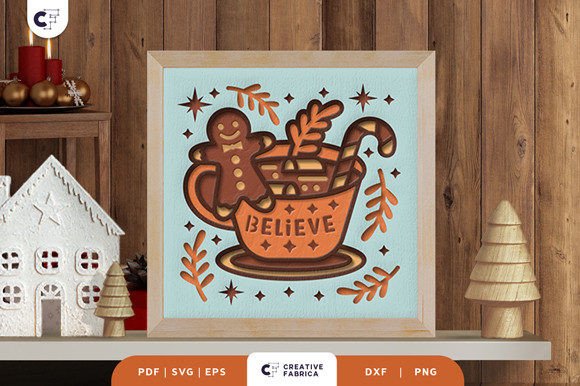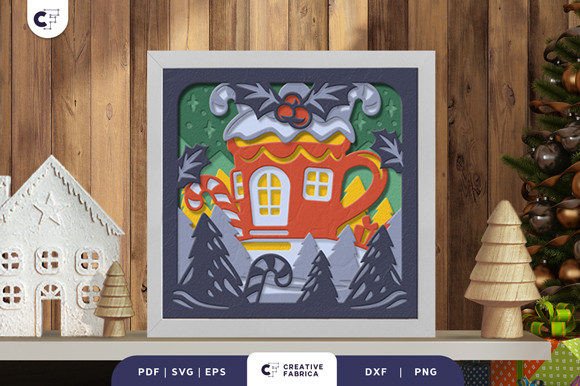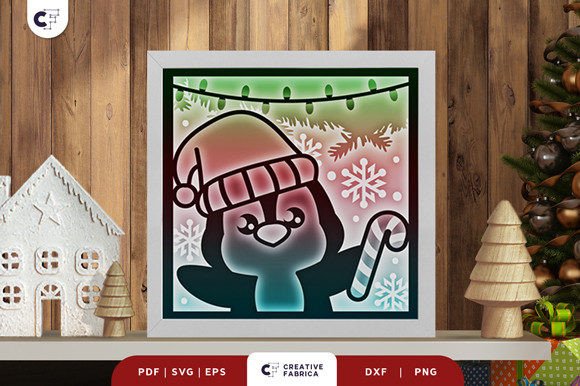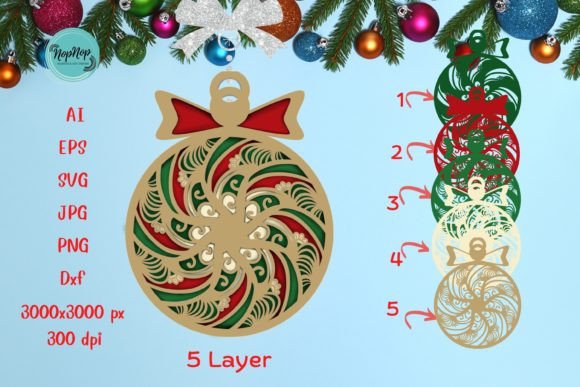
Hot Chocolate Fairy House 3D SVG for Christmas
As a brand designer who has spent years refining visual identities for local businesses, I approach every new graphic design asset with a critical eye. The goal is never just to find something "cute," but to discover elements that elevate a product from a commodity to a cherished experience. Recently, while scouting for seasonal branding materials for a boutique hot chocolate shop and their line of artisanal cocoa blends, I encountered the Hot Chocolate Fairy House 3D Shadow Box. This piece immediately stood out not merely as a craft template, but as a potential cornerstone for a cohesive holiday marketing campaign.
The First Impression: Mood and Brand Personality
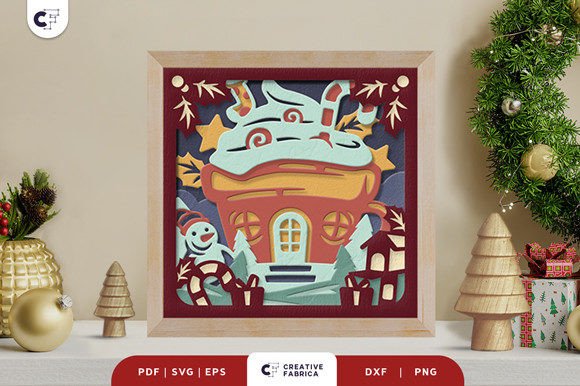
At first glance, the Hot Chocolate Fairy House 3D Shadow Box exudes a specific warmth that is difficult to manufacture with generic clipart. It feels whimsical yet grounded, suggesting a brand personality that values tradition, comfort, and the magic of the season. For a small business owner or a handmade seller, this asset communicates an invitation to slow down and savor the moment. The layered nature of the design implies depth and care, qualities that translate directly into perceptions of product quality.
This design fits perfectly within the aesthetic of rustic-chic bakeries, cozy coffee shops, or skincare brands launching winter-limited editions like peppermint body scrubs. It strikes a balance between playful and elegant, making it versatile enough for a children's product line or a sophisticated boutique gift set. Unlike flat illustrations that can feel static on packaging, the implied three-dimensionality of this 3D SVG creates a dynamic visual hierarchy that draws the eye immediately, promising a premium unboxing experience.
Integrating the Asset into Real Business Scenarios
When evaluating how to deploy this asset for a real local business project, the possibilities extend far beyond simple decoration. Imagine a small bakery releasing a limited-edition "Winter Wonderland" hot chocolate mix. The Hot Chocolate Fairy House 3D Shadow Box could serve as the hero graphic on the front of the product label, instantly communicating flavor notes of marshmallow, cinnamon, and nostalgia without a single word of text.
In terms of packaging design, this asset works beautifully as a die-cut window element or a foil-stamped accent on a matte black box, creating a striking contrast that enhances shelf appeal. For small business branding, it can be adapted into logo design variations for the holiday season, perhaps serving as a secondary mark for social media headers or email signatures. Furthermore, the intricate details make it ideal for high-quality hang tags, thank-you cards, and even custom stickers that customers will want to keep and reuse.
Beyond physical products, this design asset is a powerhouse for digital marketing. As a social media manager, I would use this illustration to create engaging promotional ads, story templates, and website banners. The festive nature of the Christmas theme ensures high engagement during the Q4 shopping rush. Whether used in a Canva template for a flyer or as a background element for a video ad, the Hot Chocolate Fairy House 3D Shadow Box provides a consistent visual language that ties all marketing visuals together.
Strategic Value for Professional Branding
The true value of a design asset lies in its ability to strengthen the overall brand identity. By incorporating the Hot Chocolate Fairy House 3D Shadow Box, a business can achieve a stronger first impression that differentiates them from competitors using stock photos. The unique structure of the fairy house suggests craftsmanship, which fosters improved customer trust and a more professional packaging presentation.
For a local business, consistency is key. Using this asset across various touchpoints—from menu graphics and price lists to business cards and printable inserts—creates a unified narrative. It builds a clearer visual hierarchy, guiding the customer's eye to the most important information while adding emotional resonance. In a crowded market, these polished marketing visuals help a handmade business stand out, transforming a simple transaction into a memorable brand interaction.
Where the Design Shines and Where to Exercise Caution
While the Hot Chocolate Fairy House 3D Shadow Box is versatile, strategic application is crucial. This asset works best as a focal point on product labels, as a decorative brand element on seasonal packaging, or as a centerpiece for promotional banners. Its detailed nature makes it perfect for large-format prints like posters and flyers where the intricacies can be fully appreciated. It also excels in product mockups, allowing designers to showcase how the final brand will look on physical goods before production begins.
However, there are scenarios where caution is advised. Due to its detailed nature, this design should be used carefully on very small labels or ingredient-heavy layouts where it might compete with legal information or essential text. It may not suit formal corporate branding or luxury minimalist brands that rely on stark simplicity. Additionally, when placing the asset on low-contrast backgrounds, the delicate lines of the SVG design might get lost, reducing its impact. It is vital to ensure the decoration supports the message rather than overwhelming it.
Practical Notes for the Brand Designer
Before committing this asset to a client project or your own product line, rigorous testing is essential. Start by applying the Hot Chocolate Fairy House 3D Shadow Box to real packaging mockups to gauge scale and proportion. Always check the design in black and white to ensure it retains its integrity for cost-effective printing options. Preview it on small labels to confirm legibility and test it against your specific brand colors to verify harmony.
Compare the asset with competitor packaging to ensure your brand remains distinct. Inspect the PNG transparency for clean edges and review the SVG file for vector editability, ensuring you can adjust layers if needed. Test the design beside various font styles, including serif, sans serif, script, handwritten, and display fonts, to find the perfect typographic pairing. Finally, always confirm the commercial licensing terms. Ensure you have the right to use this asset for client work, business branding, and physical product sales. With proper evaluation and application, this graphic design asset can become a defining element of your next successful holiday campaign.